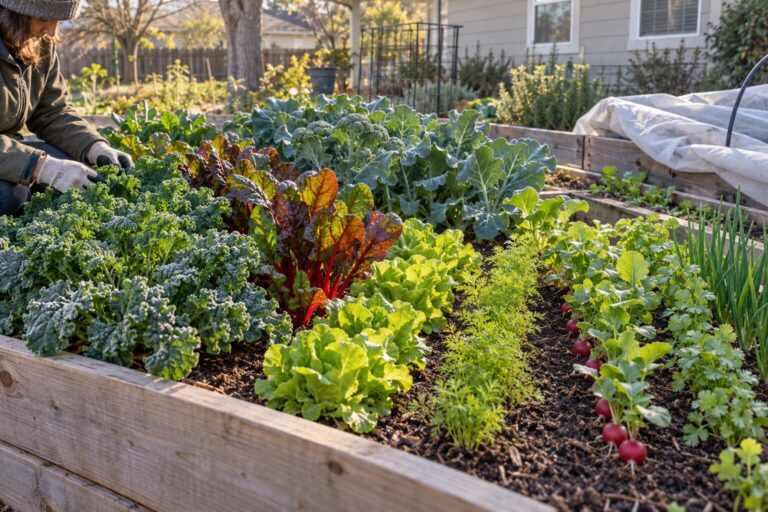
Planning a Productive Central Texas Fall Vegetable Garden
Late summer may still feel relentless in Central Texas, but August is when successful fall gardens begin. The goal is not to plant everything at once. Start by preparing the soil, checking irrigation, and matching each crop to the temperatures it prefers.
Prepare the bed first
Remove exhausted plants and weeds, then loosen compacted soil without pulverizing it. Add a modest layer of finished compost and cover bare soil with mulch. If the bed has struggled, a soil test is more useful than guessing at fertilizer.
Choose crops by temperature
Warm-season vegetables such as bush beans, cucumbers, and summer squash can be planted for a quick fall harvest when there is enough time before cool weather. Broccoli, cabbage, kale, chard, carrots, radishes, lettuce, and other cool-season crops generally perform better as temperatures begin to ease.
Protect young plants
New transplants can benefit from temporary afternoon shade during hot spells. Water deeply enough to moisten the root zone, but avoid keeping the surface constantly wet. Check seedlings daily until roots establish.
Keep notes on planting dates and varieties. Central Texas weather changes quickly, and a simple garden record will make next season easier to plan.